

Why the Same Outfit Can Look Different With Different Shoe Shapes
Shoes often receive less attention than clothing when people consider an outfit. Yet their shape can change how the entire look appears. The same trousers, shirt, or jacket may seem longer, shorter, heavier, or more streamlined simply because the shoes underneath have changed. This happens because footwear creates the visual endpoint of an outfit. Its toe shape, sole thickness, heel height, and overall volume influence how the eye reads the proportions above it. A narrow shoe can create a different impression from a wide sneaker, even when both are worn with identical clothes. Understanding this relationship can make styling decisions easier. Instead of treating shoes as an afterthought, consider them part of the outfit’s overall structure.
Changing the Appearance of Leg Length
Shoe shape can influence how long or short the legs appear. Pointed or almond-shaped shoes tend to extend the visual line of the foot. When paired with trousers that fall close to the shoe, this can create a longer-looking lower body. Rounded shoes create a softer visual ending. Chunky sneakers or boots can make the feet appear more substantial, which may change the perceived proportion between the shoes and the legs. Heel height can add another layer. A raised heel changes the angle of the foot and can visually lengthen the leg. However, the effect also depends on trouser length, color, and silhouette. A cropped pair of pants creates a different relationship with shoes than full-length trousers.
Balancing Trouser Volume
The width and shape of trousers can make shoe selection especially noticeable. Wide-leg pants already create considerable volume around the lower body. Pairing them with very narrow shoes can produce a strong contrast between fabric and footwear. That contrast may be intentional, but it can also make an outfit feel visually uneven. A shoe with a broader toe or thicker sole can provide more weight at the bottom, creating a closer relationship with the trouser volume. Slim trousers create different opportunities. They can work with narrow shoes for a clean appearance or with larger footwear for a more contemporary contrast. The key factor is not following a single rule. It is understanding how the two shapes interact.
Creating Contrast Through Footwear
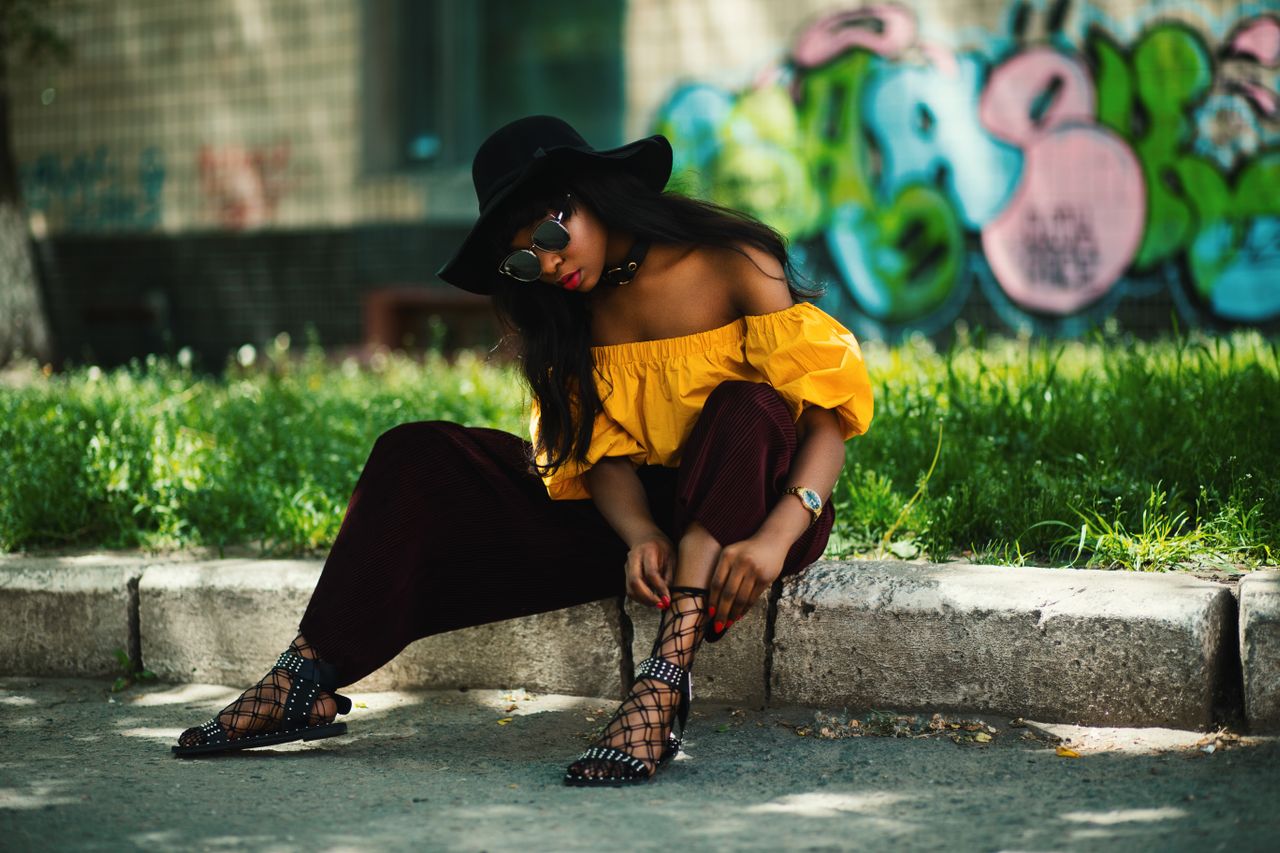
Shoes can deliberately introduce contrast into an outfit. A delicate shoe with structured clothing may soften the overall appearance. A heavy boot can make the same clothing feel more rugged or substantial. Color also affects this relationship. Shoes that closely match trousers can create visual continuity, while strongly contrasting footwear draws attention toward the feet. Neither approach is automatically better. The choice depends on where you want the eye to move. Material can influence the effect as well. Smooth leather may appear sharper than textured fabric or mesh. Glossy finishes can attract more attention, while matte surfaces tend to blend more quietly into the outfit.
Influencing Overall Outfit Structure
Every outfit has a visual balance between its upper, middle, and lower sections. Shoes contribute to that balance even when they are not the main focus. A bulky shoe can anchor an oversized outfit. This can help prevent large garments from making the lower body appear visually light. Conversely, a minimal shoe may work well when the clothing already contains substantial layers or strong shapes. Shoe height matters too. High boots cover more of the leg, while low-cut shoes leave more space visible around the ankle. That small difference can change the apparent proportions of a skirt, dress, or pair of trousers.
Choosing Shoes for Intended Proportions
Rather than asking whether a particular shoe is fashionable, consider what it does to the outfit’s proportions. Look at the full silhouette in a mirror. Notice where the eye stops and whether the footwear feels connected to the clothing. If an outfit feels top-heavy, a more substantial shoe may create balance. If the clothing already has considerable volume, a simpler shoe may provide a cleaner transition. These are styling observations, not strict rules. The best choice also depends on personal comfort and practical needs. A shoe can look appropriate but become difficult to wear if its shape, sole, or heel does not suit the occasion.
Shoe shape has more influence than many people realize. Toe design, sole thickness, heel height, color, and volume can all change how familiar clothing appears. This explains why an outfit can look noticeably different without changing a single garment. By viewing footwear as part of the complete silhouette, you can make more deliberate styling choices and understand why certain combinations feel naturally balanced.… Read More